Have you ever poured twenty hours into a intricate hand-crafted piece, calculated your costs, given a potential buyer a fair quote, and watched their eyes widen before hearing: “Oh, wow… I could just buy something like that at Target for fifteen bucks”?
If you’ve run a handmade business for more than a week, you know the feeling. It’s a subtle, pervasive belittling of your craft, a collective cultural assumption that because you work with your hands, your business is just a “cute little hobby” or “pins and needles money.”
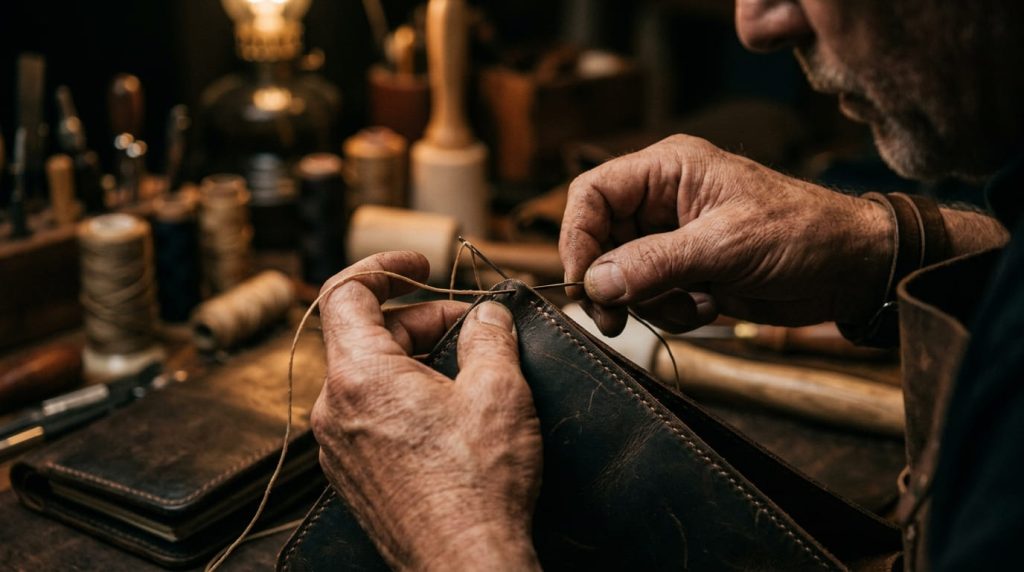
This stigma isn’t an illusion. It is a deeply entrenched economic reality that makers fight every day. But where does this bias come from, and why does society expect creative professionals to work for far less than they are worth?
1. The “Hobbyist Price Floor” Distorts the Market
The primary reason handmade work is perceived as cheap comes down to a fundamental market distortion: professional artisans and casual hobbyists sell on the exact same platforms.
Imagine two people selling hand-knitted blankets on Etsy or at a local weekend market:
- The Casual Hobbyist: She knits while watching TV in the evenings to relax. She buys $30 worth of yarn, spends 15 hours on the blanket, and sells it for $45. She doesn’t care about her labour cost, she just wants to clear space in her closet and buy more yarn for her next project.
- The Business Owner: She relies on her craft to pay rent and buy groceries. Factoring in $30 of materials, 15 hours of skilled labour at a baseline $20/hour, plus platform fees and overhead, her blanket must cost around $350 to be a viable business.
When a customer sees those two items side by side, they rarely understand the economic difference. They don’t see that one is a subsidised hobby and the other is a trade. The hobbyist accidentally sets an artificially low price floor, making the professional look “overpriced” by comparison.
2. Historical Gender Bias and “Domestic Tasks”
There is an undeniable historical component to how society values handwork. For centuries, crafts like sewing, embroidery, weaving, soap-making, and pottery were categorised as “domestic duties” unpaid labour performed in the home, typically by women.
When industrialisation took hold, factory work (traditionally male-dominated) was classified as “real trade,” while domestic handcrafts were relegated to leisure or home keeping. Even today, society struggles to decouple manual craftsmanship from its historical reputation as “domestic leisure.”
We readily accept paying a plumber or a mechanic $100 an hour for their manual skill without batting an eye. Yet, when a maker asks for a fair hourly wage for precision hand-sewing or woodworking, society baulks.
3. The “Passion Tax”
Perhaps the most insidious myth in the creative industry is the expectation of the Passion Tax.
There is a widespread societal belief that “if you love what you do, the joy is part of your payment.”
Because creating things brings immense personal satisfaction, buyers unconsciously believe makers shouldn’t expect standard financial compensation. But passion doesn’t pay for electricity, studio rent, raw materials, or health insurance. You would never expect an architect, a chef, or a software engineer to discount their work simply because they find their job fulfilling. Creative joy should be a bonus of the profession not a discount passed on to the buyer.
4. Shifting from “Hobbyist” to “Creative Business”
Overcoming this cultural stigma requires a fundamental shift, not just from buyers, but from makers themselves.
As long as artisans apologise for their prices, ignore their Labour hours, or view their work as a “side gig that pays for itself,” the market will continue to treat handmade goods as cheap novelties.
- Stop Hiding the Labour: Buyers don’t understand the time investment until you show them. Process videos, raw material breakdowns, and “behind the craft” stories help educate your audience on why your piece costs what it does.
- Refuse to Compete with Mass Production: You cannot beat factory prices, and you shouldn’t try. Position your work around quality, longevity, original design, and human connection.
- Know Your Numbers: Price for profit, not just survival. Include direct material costs, exact labour hours, fixed overhead, and a built-in profit margin for growth. How to Price Handmade Items for Profit (Without Undercharging)
Handmade work is not mass production, and it shouldn’t be priced like it. When we stop treating our own work like a cute hobby, the rest of the world will finally follow suit.